Emotional Regulation for Kids: Simple Tools That Actually Work in Real Life
Emotional regulation sounds like a big concept.
Clinical.
Complicated.
Maybe even abstract.
But in real life?
It looks like this:
A child who’s furious because their toast broke in half.
A meltdown over the wrong color cup.
Tears at bedtime.
Anger when a sibling grabs a toy.
Emotional regulation is not about stopping emotions.
It’s about helping a child move through them without becoming overwhelmed.
And the good news?
It’s teachable.
Not through lectures.
Through small, repeatable moments.
What Emotional Regulation Actually Means
Emotional regulation is the ability to:
Notice feelings
Tolerate them
Calm the body
Return to connection
It does not mean:
Suppressing emotions
Never crying
Always being calm
Children are not born knowing how to regulate.
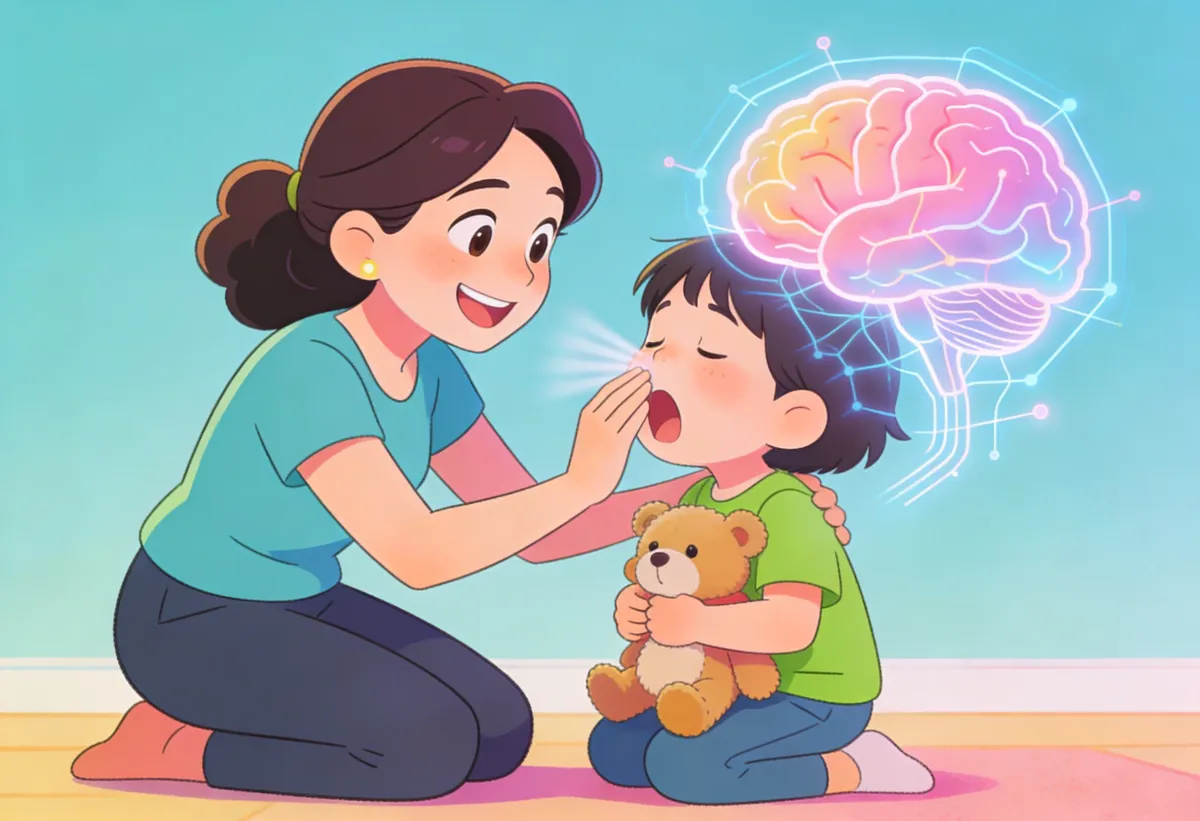
They learn it through co-regulation — repeated experiences of being calmed by someone steady.
🎥 Emotional Regulation Explained Simply
This short video explains emotional regulation in child-friendly terms:
👉 How Kids Develop Emotional Regulation (Child Mind Institute)
It reinforces that regulation develops through support, not punishment.
Why Emotional Regulation Is Hard for Kids
Children’s brains are still developing.
The emotional center (amygdala) is strong.
The reasoning center (prefrontal cortex) is still maturing.
So when emotions rise:
Logic drops
Impulse control weakens
Big reactions happen fast
That’s not defiance.
That’s development.
The Most Important Rule: Regulate Before You Educate
Teaching during a meltdown doesn’t work.
Explaining during yelling doesn’t stick.
Correction during tears often escalates.
Regulation must come first.
That means:
Calm tone
Slower pace
Fewer words
Physical grounding
Once calm returns, learning becomes possible.
Simple Emotional Regulation Tools That Actually Work
These are not theoretical.
These are real-life, repeatable tools parents can use daily.
1️⃣ Co-Regulation
This is the foundation.
When your child is dysregulated, you stay regulated.
Not perfectly.
Just enough.
You might say:
“I’m here.”
“Let’s breathe together.”
“You’re safe.”
Children borrow your nervous system until they can manage their own.
🎥 Co-Regulation in Action
This short explanation shows how co-regulation works:
👉 Co-Regulation Explained for Parents
Notice how calm presence shifts behavior without control.
2️⃣ Belly Breathing
Breathing is one of the fastest ways to calm the nervous system.
But telling a child to “take deep breaths” often backfires.
Instead:
Model it yourself
Make it playful
Use visuals
Say:
“Let’s blow up a balloon.”
“Smell the flower, blow out the candle.”
Children mirror more than they obey.
🎥 Guided Breathing for Kids
👉 Balloon Breathing for Kids
Short, simple, effective.
3️⃣ Naming Emotions
When children can label feelings, they gain distance from them.
You can say:
“You look frustrated.”
“That felt disappointing.”
“Your body seems overwhelmed.”
Naming reduces shame.
It builds emotional vocabulary.
Over time, children begin to say:
“I’m mad.”
“I feel nervous.”
That’s progress.
4️⃣ Giving the Body a Job
Big emotions live in the body.
Movement releases stress.
Try:
Wall pushes
Hand squeezes
Jumping
Stretching
Slow marching
You’re not distracting.
You’re regulating physically.
5️⃣ Creating a Calm-Down Routine
Consistency builds security.
You might create a simple routine:
Breathe
Sit together
Name feeling
Reflect later
Repetition wires the brain.
Why Rewards and Punishments Don’t Teach Regulation
Rewards can motivate behavior.
Punishments can stop behavior.
But neither teaches:
Body awareness
Emotional tolerance
Self-soothing
Regulation develops through experience, not consequence.
6️⃣ Reduce Sensory Overload
Some meltdowns are sensory.
Watch for:
Loud environments
Bright lights
Hunger
Fatigue
Too many transitions
Prevention is easier than recovery.
🎥 Overstimulation Explained
👉 Is It Overstimulation? Signs and Solutions
Helpful for recognizing environmental overwhelm.
7️⃣ Teach “Pause” Skills When Calm
You cannot teach regulation mid-meltdown.
Teach it during calm moments.
Practice:
Slow breathing
Counting
Naming feelings
Role-playing frustration
Then use it later.
Regulation is a skill built in low-stress moments.
The Parent’s Role in Emotional Regulation
You are not responsible for eliminating emotions.
You are responsible for modeling how to move through them.
Children watch:
How you respond to stress
How you repair after conflict
How you calm yourself
Modeling is powerful.
If You Struggle With Regulation Too
Most adults were never taught emotional regulation explicitly.
If you feel overwhelmed, reactive, or easily triggered:
You’re not broken.
You’re learning alongside your child.
Start with one tool:
Breathing.
Pausing.
Lowering your voice.
Small shifts create long-term change.
Long-Term Benefits of Emotional Regulation
Children who develop strong regulation skills are more likely to:
Manage stress effectively
Build healthy relationships
Solve problems calmly
Develop resilience
You’re not just preventing meltdowns.
You’re building life skills.
What Emotional Regulation Is NOT
It is not:
Obedience
Silence
Compliance
Emotional suppression
A quiet child is not necessarily regulated.
A crying child is not necessarily dysregulated.
Look beneath behavior.
How Long Does It Take?
Emotional regulation develops over years.
Not weeks.
Progress looks like:
Faster recovery
Fewer escalations
More awareness
Increased communication
It’s gradual.
And it compounds.
Final Thoughts
Emotional regulation for kids is not about having perfect children.
It’s about teaching them:
Feelings are safe.
Big emotions pass.
Calm can return.
Connection stays.
And the most powerful regulation tool?
A steady adult nervous system.
That’s you.
💛 Want simple tools that support regulation in real life?
RaiseCalm tools are designed to help parents move from reaction to regulation — with repeatable strategies that fit into everyday moments.
Because emotional regulation is learned one small interaction at a time.