How to Calm a Child During a Meltdown in Public (Without Yelling or Leaving the Store)
It always happens at the worst time.
The grocery store.
The airport.
The checkout line.
A family gathering.
Your child melts down.
People stare.
Your heart races.
And suddenly it feels like you’re on stage — being judged, evaluated, measured.
You’re not just calming your child.
You’re managing embarrassment, pressure, noise, and your own rising panic.
If you’ve ever thought:
“Everyone thinks I can’t control my child.”
“Why is this happening right now?”
“I just need this to stop.”
Take a breath.
Public meltdowns are not a reflection of your parenting.
They’re a reflection of an overwhelmed nervous system — in a stimulating environment.
Let’s walk through what actually works.
Why Public Meltdowns Feel Bigger
Meltdowns in public feel harder for three reasons:
More stimulation (lights, sounds, crowds, smells)
Less predictability
More pressure on you
When children are overstimulated, their nervous system fills up quickly.
Add hunger, tiredness, transitions, or disappointment — and it can tip over fast.
This isn’t misbehavior.
It’s overload.
🎥 What Happens During a Meltdown?
Before we go further, this short video explains what’s happening inside your child’s brain during a meltdown:
👉 Why Kids Have Meltdowns (Brain-Based Explanation)
Understanding that this is neurological — not intentional — shifts how you respond.
Step 1: Drop the Audience
The moment your child melts down in public, your brain may shift to:
“What do these people think?”
That thought increases your stress — which increases your child’s stress.
Your first job is to mentally remove the audience.
Tell yourself:
“This is about my child, not them.”
Most people:
Have been there
Don’t care as much as you think
Or will forget in five minutes
Regulation starts with reducing your own pressure.
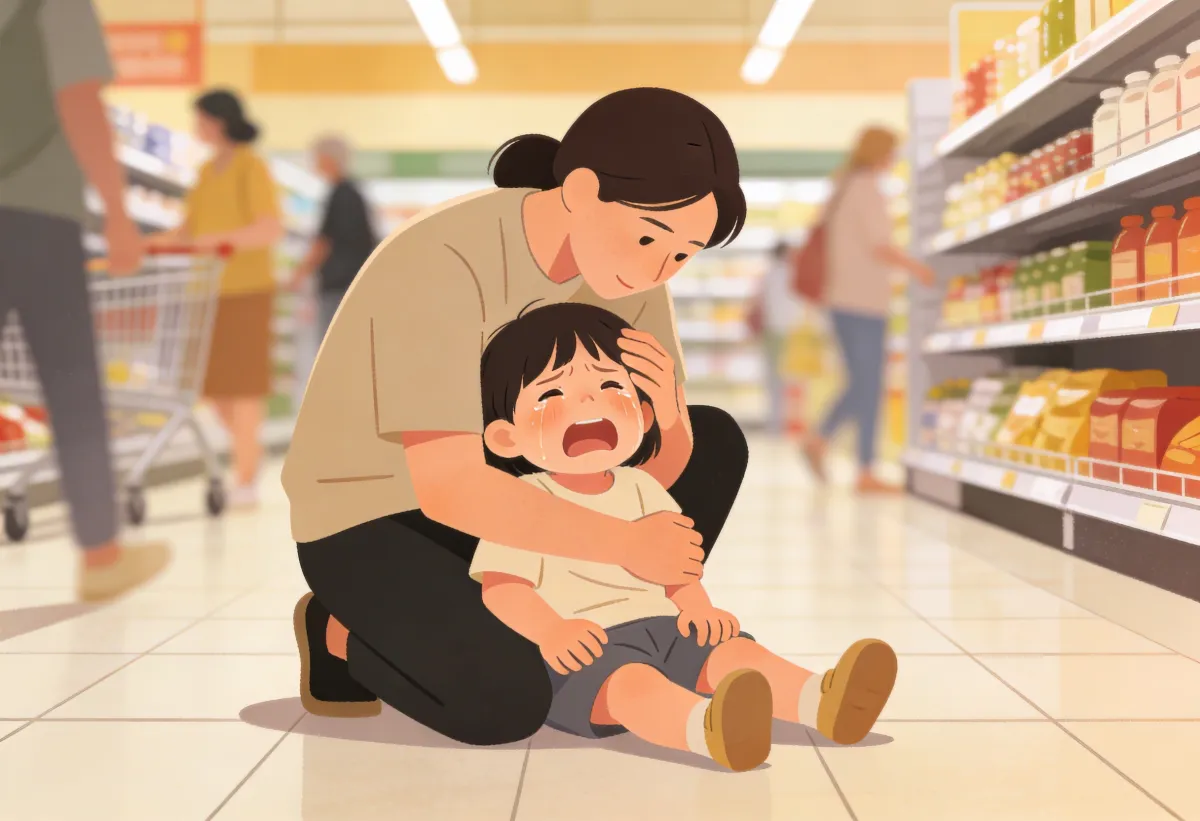
Step 2: Get Low and Get Close
During a meltdown, standing over your child and talking loudly often escalates things.
Instead:
Kneel down
Lower your voice
Make eye contact if they can tolerate it
Reduce words
You might say:
“I’m here.”
“Your body feels big right now.”
“I’ve got you.”
Connection first.
Not correction.
Step 3: Simplify the Environment
If possible, change one sensory input:
Move to the side of the aisle
Step outside for air
Reduce eye contact from strangers
Turn your body slightly to shield
You don’t have to abandon your cart immediately.
Sometimes reducing one input lowers overwhelm enough to stabilize.
🎥 A Calm-Down Strategy You Can Use Anywhere
This short breathing exercise works well in public because it’s subtle and doesn’t draw attention:
👉 Balloon Breathing for Kids
You can model it quietly without announcing what you’re doing.
Children often mirror you when your nervous system slows.
Step 4: Resist the Urge to Lecture
Public meltdowns often trigger lectures like:
“You’re embarrassing yourself.”
“Stop this right now.”
“We talked about this.”
But during overload, your child cannot process reasoning.
Instead, keep it simple:
“You’re safe.”
“I won’t let you hurt anyone.”
“We’ll figure it out.”
Short phrases regulate.
Long explanations escalate.
Step 5: Hold Boundaries Calmly
Calm parenting does not mean permissive parenting.
If your child is:
Hitting
Throwing
Running
You can say:
“I won’t let you hit.”
“I’m holding your hands to keep everyone safe.”
Firm.
Calm.
Brief.
That’s regulation with boundaries.
Why Yelling Makes Public Meltdowns Worse
When you yell in public, three things happen:
Your child’s nervous system spikes further.
Shame increases.
The meltdown lasts longer.
Even if yelling “works” momentarily, it often leads to:
More resistance next time
Heightened anxiety
Fear-based compliance
Calm may feel slower — but it builds long-term skills.
🎥 Why Staying Calm Works (Science-Based)
This short explanation helps parents understand co-regulation:
👉 Co-Regulation Explained for Parents
It reinforces why your calm nervous system helps settle your child’s.
Step 6: Decide Whether to Stay or Leave
You don’t always have to leave.
Ask yourself:
Is my child escalating or stabilizing?
Can we pause and regulate here?
Is safety compromised?
Sometimes staying builds resilience.
Sometimes leaving protects everyone.
Neither option makes you a failure.
What If You Feel Embarrassed?
Public parenting is vulnerable.
But here’s something powerful:
Modeling calm during chaos teaches your child that emotions aren’t emergencies.
You are showing them:
Big feelings don’t scare me.
I won’t abandon you.
We can handle this.
That lesson lasts longer than the meltdown.
Step 7: Debrief Later — Not in the Parking Lot
Once everyone is calm, maybe at home later, you can say:
“That was a big moment in the store.”
Ask:
“What did your body feel like?”
“What might help next time?”
No shame.
No blame.
Just learning.
Preventing Future Public Meltdowns
While you can’t prevent all meltdowns, you can reduce frequency by:
Prepping before entering (“We’re getting 5 things.”)
Bringing a regulation tool (snack, fidget, small comfort item)
Keeping trips short during vulnerable times
Watching for early signs of overload
Meltdowns rarely come from nowhere.
They build.
Early Signs of Public Overwhelm
Look for:
Clinginess
Increased whining
Fast talking
Impatience
Sudden silliness
Refusal
Intervening early is easier than calming mid-explosion.
What Public Meltdowns Teach Children
Handled calmly, public meltdowns teach:
Emotions are safe
My parent won’t shame me
Big feelings pass
Repair is possible
Handled with yelling or embarrassment, they teach:
Emotions are dangerous
Public mistakes are humiliating
I am too much
That’s why your response matters more than the meltdown.
What If You Lost It?
If you yelled in public, snapped, or walked away in frustration:
Repair.
You can say:
“That was hard. I felt overwhelmed too. I’m working on staying calmer.”
Repair builds more security than perfection ever could.
The Bigger Picture
Public meltdowns feel dramatic.
But they are just nervous systems overwhelmed in loud environments.
Your job isn’t to eliminate big emotions.
It’s to help your child return to calm — without fear.
And sometimes that starts with calming yourself.
Final Thoughts
If your child has a meltdown in public:
Pause.
Lower your voice.
Reduce stimulation.
Stay steady.
You are not on trial.
You are teaching regulation in real time.
And that matters far more than what strangers think.
💛 Want tools that work in real-world moments?
RaiseCalm tools are designed for grocery stores, airports, school drop-offs, and everyday stress.
Because calm parenting isn’t about perfect conditions.
It’s about what you do when everything feels chaotic.
Turn public meltdowns into moments of connection.
Start using simple, science-backed calm tools today.