
What to Say to a Child Who Is Crying and Won’t Calm Down
Few parenting moments feel more helpless than this one.
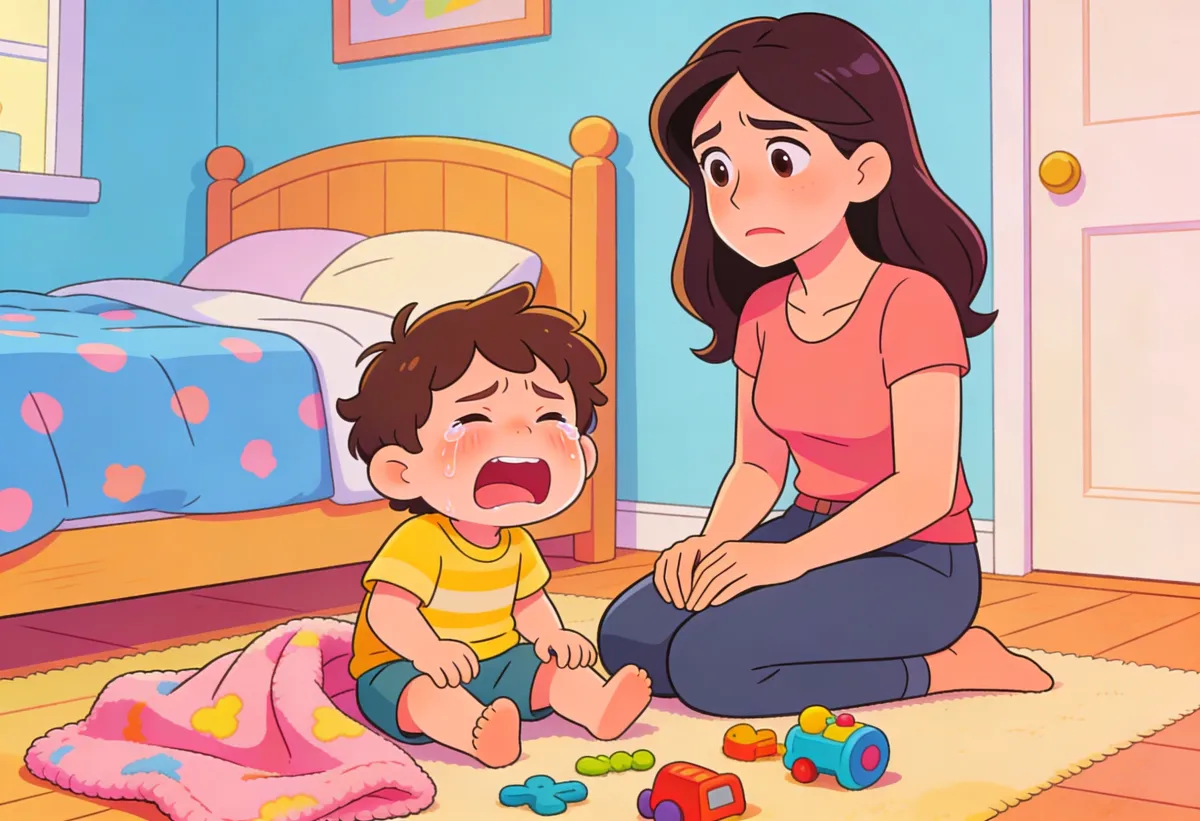
Your child is crying.
Not just tearing up — fully crying.
Loud.
Unstoppable.
Raw.
You try reasoning.
You try distraction.
You try explaining.
Nothing works.
And eventually your brain whispers:
“What do I even say right now?”
If you’ve been there, you’re not alone.
And the truth may surprise you:
When a child won’t calm down, the right words are fewer than you think.
Why Crying Feels So Urgent to Fix
Crying activates something deep in adults.
It can trigger:
Anxiety
Irritation
Urgency
Helplessness
Your nervous system reacts to your child’s distress.
That’s biological.
But when we rush to “fix” crying, we often:
Over-talk
Over-explain
Minimize feelings
Try to shut it down
And that usually makes crying last longer.
What’s Actually Happening When a Child Won’t Stop Crying
When emotions are intense, your child’s brain shifts into survival mode.
In that state:
Logical thinking decreases
Language processing drops
Emotional control weakens
That’s why phrases like:
“Calm down.”
“It’s not a big deal.”
“Stop crying.”
Don’t work.
They require a brain that’s currently offline.
🎥 What Happens in the Brain During Big Emotions
This short explanation helps parents understand the science behind emotional overload:
👉 The Upstairs Brain / Downstairs Brain Explained (Dr. Dan Siegel concept)
When you see crying as neurological — not manipulative — your response softens.
And softness regulates faster than control.
What to Say (Instead of “Calm Down”)
Here are phrases that support regulation rather than suppress emotion.
1️⃣ “I’m here.”
This is one of the most powerful phrases you can use.
It doesn’t fix.
It doesn’t dismiss.
It signals safety.
And safety calms the nervous system.
2️⃣ “Your body feels really big right now.”
This externalizes the emotion.
Instead of:
“You’re being dramatic.”
It becomes:
“Your body is overwhelmed.”
That reduces shame.
3️⃣ “It makes sense that you feel that way.”
Validation does not mean agreement.
It means acknowledgment.
You can validate emotion without validating behavior.
For example:
“I understand you’re mad. I won’t let you hit.”
4️⃣ “Let’s breathe together.”
Notice the word together.
You are co-regulating.
Not commanding.
You’re lending your calm nervous system to theirs.
🎥 Simple Breathing Strategy for Kids
Here’s a gentle, short breathing exercise you can try together:
👉 Balloon Breathing for Kids
Model it quietly.
Don’t force participation.
Children often join when they feel safe.
What NOT to Say
Certain phrases increase dysregulation, even if well-intentioned.
Avoid:
“You’re fine.”
“It’s not that serious.”
“Stop crying right now.”
“Big kids don’t cry.”
“If you don’t stop…”
These messages teach:
Emotions are inconvenient.
Emotions are embarrassing.
Emotions are unsafe.
Instead, we want children to learn:
Emotions are manageable.
When Crying Feels Endless
Sometimes crying lasts longer than you expect.
In those moments, your job is not to end it quickly.
Your job is to stay steady.
You can say:
“I’m staying with you.”
“This will pass.”
“I’ve got you.”
Regulation takes time.
And time feels longer when we’re uncomfortable.
Why Fewer Words Work Better
When a child is crying intensely, long explanations overload their brain further.
Keep phrases:
Short
Slow
Soft
Your tone regulates more than your vocabulary.
🎥 Co-Regulation in Action
This short video explains co-regulation clearly:
👉 Co-Regulation Explained for Parents
Notice how calm presence — not persuasion — shifts emotional intensity.
If Your Child Says “Go Away”
Sometimes children push away when overwhelmed.
If your child says:
“Leave me alone!”
You can respond with:
“I’ll give you space. I’m right here if you need me.”
That maintains connection without forcing closeness.
If You’re Getting Triggered
Crying can be deeply triggering.
If you feel yourself escalating, pause.
You can say:
“I need one slow breath.”
Regulating yourself is not selfish.
It prevents the situation from doubling in intensity.
What If You Already Snapped?
It happens.
Repair sounds like:
“I yelled because I felt overwhelmed. I’m working on staying calmer.”
Repair teaches:
Emotions are manageable.
Mistakes are repairable.
Relationships are resilient.
That’s powerful modeling.
Crying Is Not a Problem to Eliminate
Crying is:
A stress release
A regulation attempt
A communication signal
If your child feels safe crying with you, that’s trust.
Your goal isn’t silence.
It’s safety.
After the Crying Stops
Once calm returns, gently reflect.
You might say:
“That was a really big feeling.”
“What did your body feel like?”
“What could help next time?”
That builds emotional awareness over time.
Long-Term Skill Building
When you consistently respond with:
Validation
Calm presence
Short phrases
Co-regulation
Your child learns:
Emotions pass
Feelings are safe
Calm can return
I’m not alone
That’s emotional intelligence in action.
Final Thoughts
When your child won’t stop crying, the right words are simple:
“I’m here.”
“You’re safe.”
“This will pass.”
You don’t need perfect scripts.
You need calm presence.
And sometimes the most powerful thing you can say is nothing at all — just steady breathing beside them.
💛 Want simple tools you can use in emotional moments?
RaiseCalm tools are designed to support parents when emotions feel overwhelming — offering grounded, repeatable strategies for real-life parenting.
Because calm communication is learned — and it starts with small moments like this.